Outmin Vs Xero: The Xero alternative guide 2026

Outmin Vs Xero: Quick comparison overview
Feature

Xero
The fundamental difference
It's the distinction between a traditional tool you manage yourself and a comprehensive system that manages your bookkeeping for you. Recognising this fundamental difference will help frame every other comparison point in this guide.
Xero is: a powerful tool that still needs you
Outmin is: an autonomous bookkeeping system
Your time is more than bookkeeping

Features & functionality
For businesses evaluating the best alternative to Xero, let's examine how each platform handles the essential bookkeeping functions your business needs.
Xero: comprehensive but manual
Xero provides an impressive array of accounting features:
- Invoicing & Accounts Receivable: Create professional, customised online invoices quickly. Set up automated payment reminders, though you'll need to monitor payment status and follow up on overdue accounts manually
- Bank Reconciliation: Xero automatically matches bank feed lines to existing transactions and asks for your approval. However, unmatched transactions require your review, and you'll need to investigate and resolve discrepancies yourself
- Financial Reporting: Access to comprehensive reports including P&L, Balance Sheet, and Cash Flow statements, but interpreting the data and taking action based on insights remains your responsibility
- Multi-currency Support: Handle international transactions (on higher-tier plans)
- Payroll Management: Regional payroll features (often as add-ons)
- Extensive Integrations: Xero integrates with several third-party applications, including CRM systems, eCommerce platforms and payment gateways
- Dashboard & Analytics: Customisable dashboard displays cash flow, outstanding bills, bank balances, and key metrics. However, users find it "overwhelming" with poorly organised headings and cluttered visuals requiring manual interpretation
- Mobile App: Basic admin and bookkeeping tasks like creating invoices, reconciling transactions, and uploading receipts. While functional, it requires active user input and has limited functionality compared to the desktop version
Outmin: autonomy with expert oversight
Outmin approaches functionality differently. Instead of giving users tools to use, it performs the work autonomously:
- Rex Collect
Connects directly to banks, suppliers, sales platforms, payment processors. Documents flow in automatically via portals, email, and mobile without chasing - Rex Process
Reads documents with custom OCR, extracts line-level detail, applies chart of accounts and VAT rules, detects duplicates, posts ledger entries autonomously - Rex Reconcile
Matches bank transactions, reconciles AR/AP, validates VAT, verifies payroll, maintains control accounts continuously. Discrepancies flagged immediately, anomalies routed to experts - Rex Close
Runs period completeness checks, validates ledger integrity, maintains ready-close state continuously - Rex requests
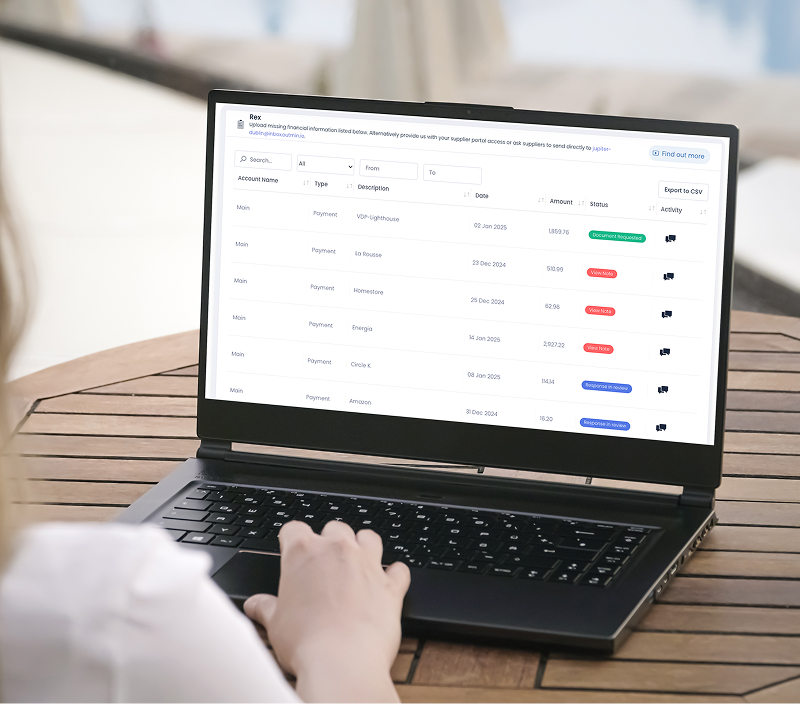
Requests missing documents or context directly from clients in-app. Practices see conversations without being involved - Practice View
Multi-client dashboard showing reconciliation status portfolio-wide. Drill down to any transaction, access source documents instantly - Business View & Mobile App
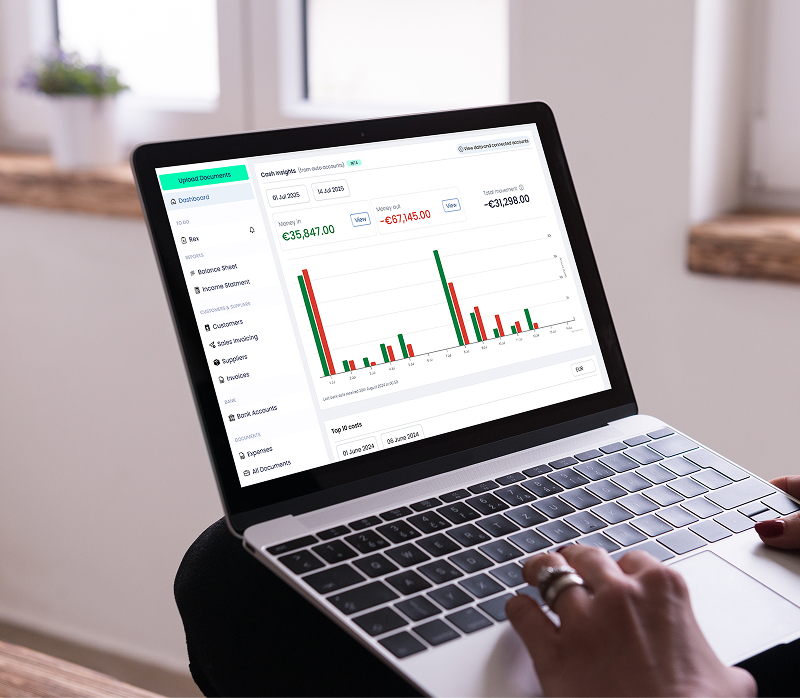
Daily cash insights, P&L, receipt uploads via photo, supplier/customer visibility. Minimal input, maximum visibility - Expert verification
Outmin's finance team reviews Rex™'s work when professional judgment needed
Chaos to clarity in ≤30 days
Integration ecosystem: very different philosophies
However, this approach requires users to research, select, configure, and maintain multiple integrations themselves. Each additional connection adds complexity to your financial workflow and requires ongoing management to ensure data flows correctly between systems.
There is no need to install apps, configure settings, or monitor data flows. Financial information is pulled in automatically and processed without manual input. Unlike systems that require users to build custom workflows, this Xero alternative operates as a complete system of record from day one.
Ease of use: DIY vs zero-touch
Xero: Mixed usability reviews
However, recent testing reveals a different story - while users appreciated specific features, some found the software "hard to use in general," with parts of the interface feeling outdated and some workflows being convoluted.
More importantly, even when the interface works well, it doesn't eliminate the substantial work required.
Users still need to upload and categorise documents, review bank reconciliation matches, chase suppliers for missing information, and interpret financial reports to take action.
For business owners (Business View):
Upload occasional receipts via mobile - that's the main task. Check cash flow, review P&L, and access financial data updated daily without input, categorisation, or reconciliation. The interface is designed for monitoring financial position, not managing bookkeeping tasks.
For accounting practices (Practice View):
See reconciliation status across an entire client portfolio from one dashboard. Drill into any client, any transaction, any document instantly. Rex™ handles collection, processing, reconciliation, and close autonomously while practices work from finished books.
The key difference: users don't need to learn how to "do" bookkeeping on Outmin – neither business owners nor their accountants. The system does the work autonomously while users monitor results.
The last bookkeeper you’ll ever hire

Pricing: never compare Xero alone
When business owners compare Outmin to Xero, they discover that comparing Outmin's pricing to Xero's monthly subscription is like comparing the cost of a fully-managed restaurant to the price of a cookbook. They serve completely different purposes.
Xero's pricing structure (2025)
UK Pricing
- Ignite (€/£16/month): Basic plan for sole traders and new businesses. Limited to 20 invoices and 10 bills, includes essential features like bank reconciliation and VAT returns.
- Grow (€/£37/month): For growing small businesses. Removes invoice/bill limits, adds expense claims for 5 users, and includes payroll for 5 people.
- Comprehensive (€/£50/month): For established businesses. Adds multi-currency support and payroll for up to 10 people.
- Ultimate (€/£65/month): Most advanced plan. Includes project tracking for 10 users, advanced analytics, and comprehensive features for larger operations.
The hidden costs of the Xero approach
What Xero's pricing doesn't include:
- Document Management: Dext or similar service (~€20-40/month)
- Human Bookkeeping: €25-75/hour
- Accountancy Support: €150-300/hour for professional guidance
- Time Investment: Your time managing the system
- Error Correction: Additional costs for mistakes
This means the true cost of a Xero setup can range from approximately €/£700-3,000+/month when including all necessary services and time investment, compared to Xero's advertised €/£16-65/month software subscription.
Outmin’s all-inclusive pricing
This Xero alternative delivers better value when considering total cost of ownership - no software subscriptions, no bookkeeping staff, just autonomous bookkeeping infrastructure.
Outmin pricing has two simple components:
- Platform access: Per client/month Replaces Xero + Dext subscriptions. Includes Practice View (portfolio dashboard), Business View & Mobile App (business owner portal), all data connections, unlimited document storage, and unlimited users.
- Rex bookkeeping: Usage-based Calculated on documents processed (invoices, receipts, statements). Includes autonomous collection, processing, reconciliation, period close, and expert verification. Volume discounts available for practices with multiple clients.
What's included in every plan:
- Rex autonomous engine — Handles collection, processing, reconciliation, and close continuously without manual work
- Practice View — Multi-client dashboard with reconciliation monitoring and drill-down capability (for accounting practices)
- Business View & Mobile App — Daily cash insights, P&L, receipt uploads, financial visibility (for business owners)
- Complete data infrastructure — Bank connections, supplier portals, sales platforms, unlimited storage
- Expert verification — Outmin's finance team reviews edge cases requiring professional judgment
The transparent pricing model means no surprise costs, no per-user fees, no separate software subscriptions to manage, and no coordination between multiple service providers.
Why pay for software you have to run?
Scalability and growth support
While Xero offers unlimited users and can technically scale with growing businesses, the manual work required creates bottlenecks:
- More transactions = more manual processing time
- Additional locations = more complexity to manage
- Growth increases the risk of errors without additional oversight
- Scaling requires hiring more bookkeeping staff
Outmin's autonomous bookkeeping system scales automatically without requiring additional staff or increased management overhead. This Xero alternative’s platform architecture supports:
- Processing capacity that scales automatically with transaction volume
- Multi-location support built into the core system
- Consistent service levels regardless of business size
- Expert support that scales with client needs
- No hiring constraints - Practices add clients without adding bookkeepers; businesses scale without bookkeeping staff
Customer support & experience
Xero provides traditional software support through:
- Online knowledge base and tutorials
- Community forums
- Email contact forms
- No direct phone support
User feedback shows ongoing problems with Xero's customer support. Users struggle to find the support portal within the software, and response times are often slow enough that people solve their own problems before getting help.
Many users are frustrated by the lack of phone support, especially when they need quick help with urgent issues.
Rather than providing support for software, Outmin provides ongoing partnership, one of the reasons why many businesses consider it the best alternative to Xero:
- Customer Success Manager: Personal point of contact
- Multiple support channels, including email and embedded messaging in platform
- Clients report very quick response times, usually within 24 hours
- Proactive outreach when documents or clarifications are needed
- Expert accountants overseeing outputs, not just support reps
When Outmin vs Xero makes sense
Choose Xero if...
- Practices have unlimited bookkeeping capacity and no hiring constraints
- Junior staff enjoy manual transaction coding and reconciliation work
- Partners want to spend time reviewing bookkeeping deliverables
- Client portfolios are small with no growth plans
- Month-end capacity crunches are manageable
Choose Outmin if...
- You want to scale without hiring: Add 50+ clients without adding bookkeepers, break the hiring-to-growth dependency
- Partners need out of delivery: Stop reviewing bookkeeping work and fixing errors, work from finished books instead
- Bookkeeping margins matter: Transform economics by eliminating labour costs while improving quality
- Month-end chaos needs to end: Books stay reconciled continuously, no backlogs, no close delays
- Quality must be consistent: Every client gets the same level of service regardless of portfolio size
- Your clients need better service: Daily updates, instant visibility, always-current books without chasing
Best fit for:
- Growth-focused practices (10-50 people, 50-500+ bookkeeping clients)
- Clients in high-transaction sectors (hospitality, retail, multi-location operations)
- Practices wanting to shift from bookkeeping delivery to advisory services
5 key questions: When comparing Outmin vs Xero
Do you want to manage bookkeeping delivery or eliminate it?
- Manage delivery with software and staff → Xero
- Eliminate manual delivery entirely → Outmin
Is growth constrained by hiring capacity?
- We can hire bookkeepers as needed → Xero
- We need to scale without adding headcount → Outmin
Are partners involved in bookkeeping delivery?
- We don’t mind partners reviewing bookkeeping work → Xero
- Partners need out of delivery completely → Outmin
Are your bookkeeping margins healthy?
- Margins are healthy, no pressure → Xero
- Bookkeeping barely breaks even → Outmin
Do your clients need better service?
- Current service levels work fine → Xero
- Clients need daily updates and instant visibility → Outmin
Xero remains a solid choice for practices with unlimited bookkeeping capacity, no growth constraints, and partners willing to stay involved in delivery work. It's particularly strong for practices that prefer managing software, tools, and bookkeeping staff as their operational model.
However, the true cost includes software licenses (Xero + Dext), bookkeeping staff salaries, training and retention overhead, month-end capacity bottlenecks, and partner time spent reviewing work and fixing errors. Growth remains constrained by hiring ability.
Outmin represents a different operational model for practices ready to transform bookkeeping delivery. The autonomous infrastructure replaces manual work entirely - software, tools, and bookkeeping staff - providing practices with portfolio-wide visibility and finished books without delivery overhead.
For practices looking to scale without hiring constraints, get partners out of delivery, and transform bookkeeping economics while improving client service, this Xero alternative offers a fundamentally different model worth serious consideration.
The question isn't which software is better. It's whether you want to keep managing bookkeeping delivery or eliminate it entirely.

Moving beyond manual bookkeeping
If you’re still deciding between Outmin vs Xero, ask yourself this:
- Do I want tools, or do I want outcomes?
- Do I want to manage the system, or let the system manage itself?
- Do I want to chase documents and fix errors, or focus on higher-value work?
If your answer is the latter, Outmin might just be your next move. Book a demo today and see how autonomous bookkeeping can replace your legacy stack.
FAQ’s
Outmin is autonomous bookkeeping infrastructure that does the work itself. Xero is accounting software that provides tools for manual bookkeeping. With Xero, users input data, reconcile bank feeds, and manage integrations. Outmin's Rex™ handles collection, processing, reconciliation, and close autonomously—practices get finished books without doing the work.
It depends on your operational model. For practices that want to manage bookkeeping delivery with software and staff, Xero offers flexible tools. For practices that want to eliminate manual delivery entirely, scale without hiring, and get partners out of bookkeeping work, Outmin is a stronger fit. It replaces the entire bookkeeping stack: software, tools, and labour.
Yes. Outmin replaces Xero (accounting software), Dext (document capture), and bookkeeping staff (manual work) with autonomous infrastructure. Rex™ connects to financial data sources, processes transactions, reconciles continuously, and delivers finished books daily. No software management, no staff coordination required.
Outmin's platform fee (€39 £29/client/month) plus usage-based Rex™ pricing typically costs more than Xero's software subscription alone, but significantly less than Xero + Dext + bookkeeping staff salaries. Practices report 25% lower bookkeeping costs per client while eliminating hiring constraints and improving capacity.
Outmin doesn't require third-party integrations. Rex™ connects directly to banks, supplier portals, sales platforms, payment processors, and payroll systems. Practices don't set up or manage integrations – all data collection happens automatically in the background.
Yes. Many practices start by using Outmin for select clients (especially high-transaction sectors like hospitality, retail, multi-location operations) while keeping existing clients on Xero. Outmin can replace Xero for those clients or run in parallel during transition. Practices retain control over VAT submissions, year-end accounts, and advisory services.
Outmin works best for clients with high transaction volumes and recurring bookkeeping patterns: hospitality (restaurants, cafes, hotels), retail (multi-location shops), food service (catering, wholesale), and growing SMEs (€1M-€10M revenue). It's especially effective for practices looking to scale client capacity without hiring more bookkeeping staff.